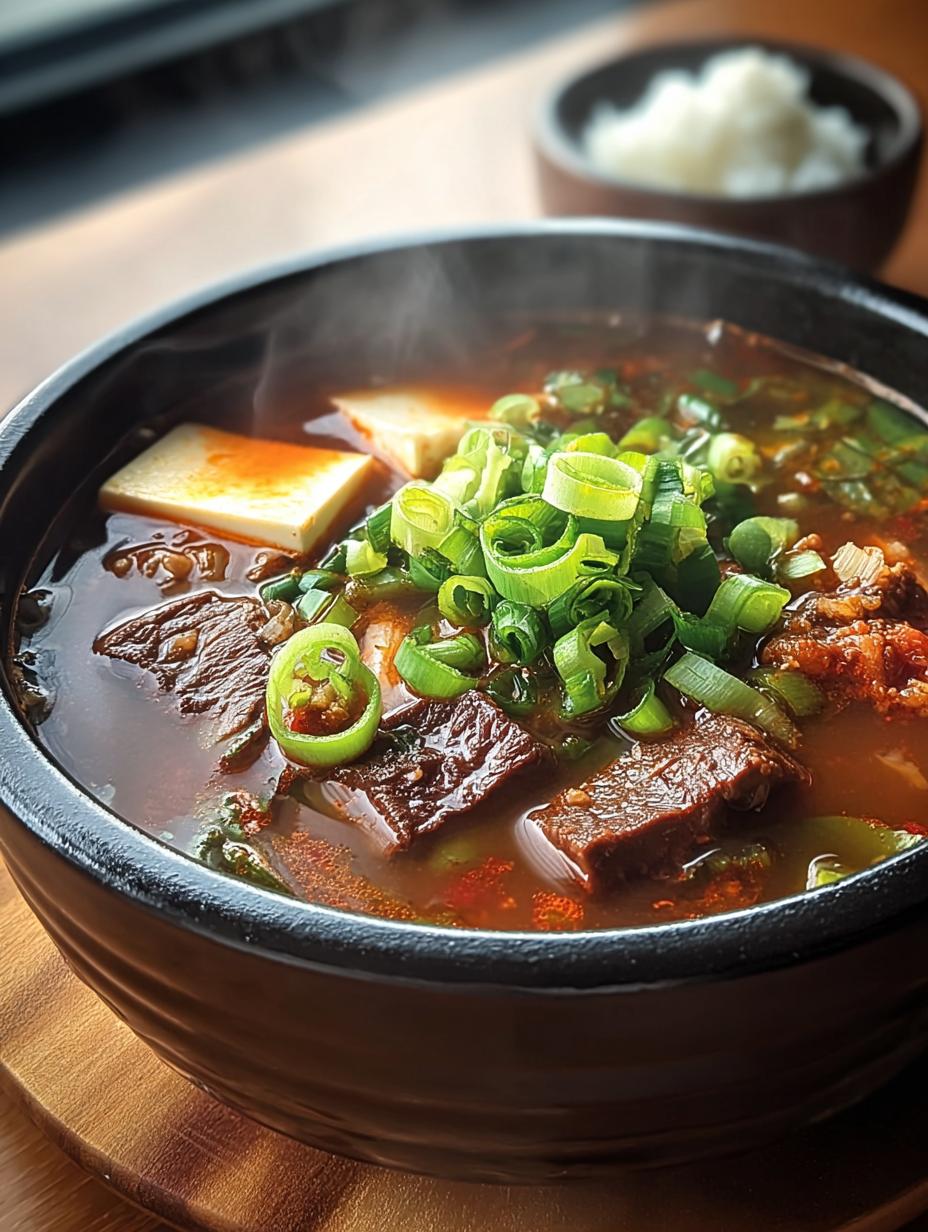
Korean Winter Soup is a comforting dish that warms the soul, especially during the chilly months. Known for its hearty flavors and nourishing ingredients, this traditional Korean soup is perfect for cozy nights in. It combines rich beef short ribs with aromatic vegetables, creating a delightful experience that offers both warmth and satisfaction. Let’s dive into how to make this delicious Korean winter soup that will leave you craving more!
Why You’ll Love This Korean Winter Soup
This Korean winter soup is a true representation of comfort food. Here are some reasons why you’ll love it:
- It’s a hearty Korean soup that fills you up with wholesome ingredients.
- Rich in flavor, thanks to the beef short ribs and spices.
- Perfectly suited for Korean soup for cold weather, making it ideal for winter nights.
- Easy to customize with your favorite vegetables or proteins.
- Packed with nutrients, it’s a healthy option for a filling meal.
- Great for meal prep, it can be stored and reheated easily.
Ingredients for Korean Winter Soup
Gather these items:
- 4 lbs beef short ribs (can substitute with beef shank or oxtail)
- 10 cups water
- 1 block tofu (can swap with seitan for vegetarian option)
- 5 stalks Korean green onions (or fresh leeks or a mix of green onions and chives)
- 1 cup radish (can omit if desired)
- 4 cloves garlic (always use fresh for best flavor)
- 1 inch ginger (fresh ginger for the most vibrant taste)
- 3 tablespoons guk ganjang (Korean soup soy sauce)
How to Make Korean Winter Soup Step-by-Step
- Step 1: Begin by soaking the beef short ribs in cold water for 1 hour to draw out any blood. After soaking, drain the water and optionally flash boil the ribs for 5 minutes before rinsing them under warm water.
- Step 2: While the ribs are soaking, finely chop the onion, ginger, garlic, and Korean green onions, including their roots if using. Set aside.
- Step 3: In a large stock pot, combine the soaked beef ribs, chopped aromatics, and 10 cups of water. Bring to a rolling boil over medium-high heat.
- Step 4: Reduce the heat to medium and skim off any foam that forms using a slotted spoon.
- Step 5: Lower the heat to medium-low and let the broth simmer uncovered for 1 hour while skimming the foam occasionally.
- Step 6: After an hour, incorporate the radish slices into the broth. Cook for an additional 20 minutes or until the radish is tender but still holds its shape.
- Step 7: Once the radish is tender, discard the aromatics from the pot. Season the broth with guk ganjang, sea salt, and the remaining garlic, stirring well. Simmer for another 10 minutes.
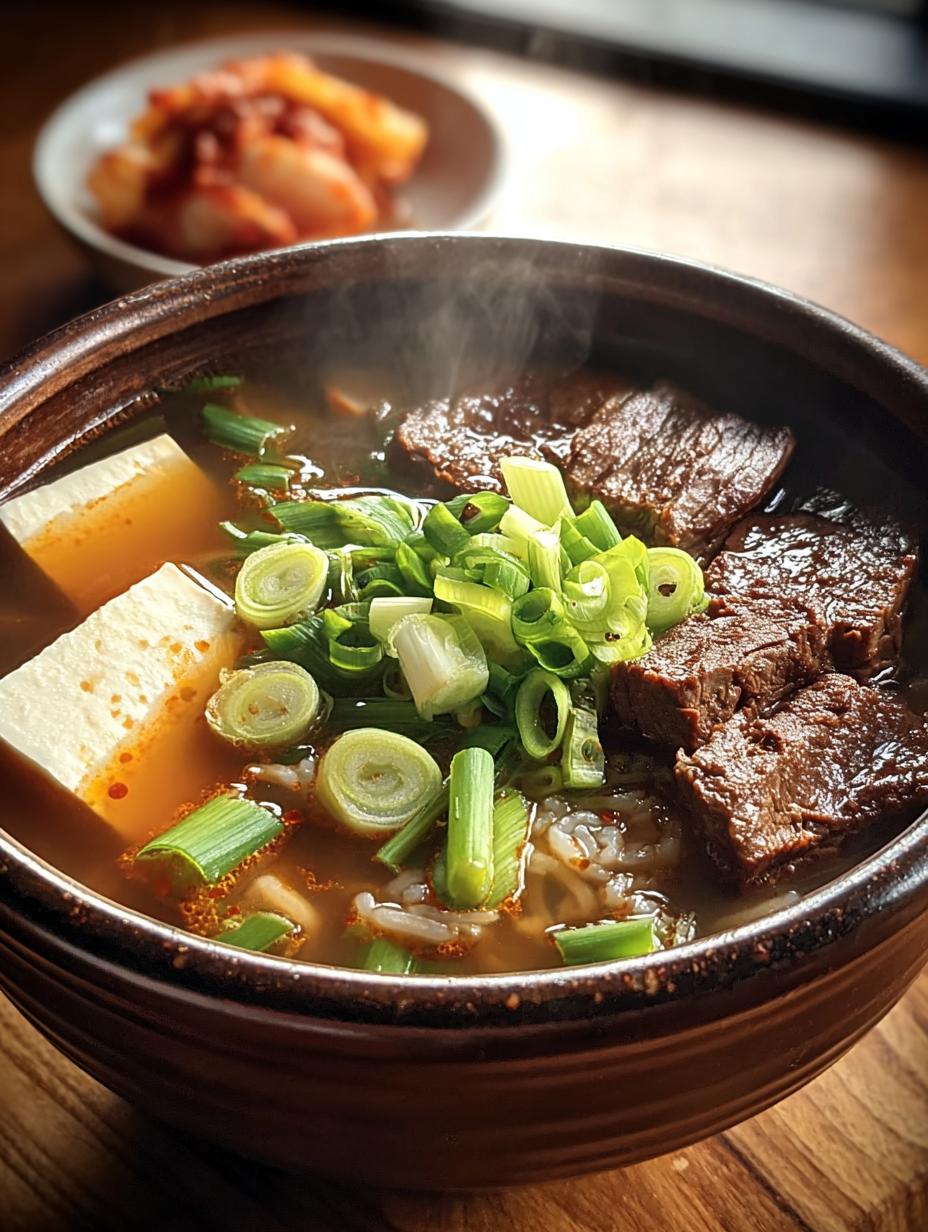
- Step 8: Ladle the warm soup into bowls, garnishing with freshly sliced green onions and a sprinkle of black pepper.
Pro Tips for the Best Korean Winter Soup
Keep these in mind:
- Use fresh ingredients for the best flavor, especially garlic and ginger.
- Adjust the seasoning according to your taste, adding more guk ganjang if desired.
- For a vegetarian version, substitute beef with tofu or seitan.
Best Ways to Serve Korean Winter Soup
This soup is best served hot. Here are a few ideas:
- Pair it with steamed rice for a complete meal.
- Add kimchi on the side for an extra kick of flavor.
- Serve with pickled vegetables to enhance the dish.
How to Store and Reheat Korean Winter Soup
Leftovers can be stored in an airtight container for up to 3 days in the refrigerator. To reheat, simply warm it on the stovetop or in the microwave until heated through. This makes it a great option for meal prep!
Frequently Asked Questions About Korean Winter Soup
What’s the secret to perfect Korean Winter Soup?
The secret lies in the quality of the beef and the freshness of the aromatics used. Using quality short ribs along with fresh garlic and ginger ensures a rich and flavorful broth.
Can I make Korean Winter Soup ahead of time?
Yes, this soup can be made ahead of time and stored in the refrigerator. The flavors deepen as it sits, making it even tastier the next day!
How do I avoid common mistakes with Korean Winter Soup?
To avoid common mistakes, make sure to skim the foam during cooking. This helps create a clearer broth. Also, don’t rush the simmering process; a longer simmer enhances the flavor.
Variations of Korean Winter Soup You Can Try
Here are some variations to explore:
- Add a variety of vegetables like zucchini or mushrooms for added texture.
- Use different proteins such as chicken or pork for a unique twist.
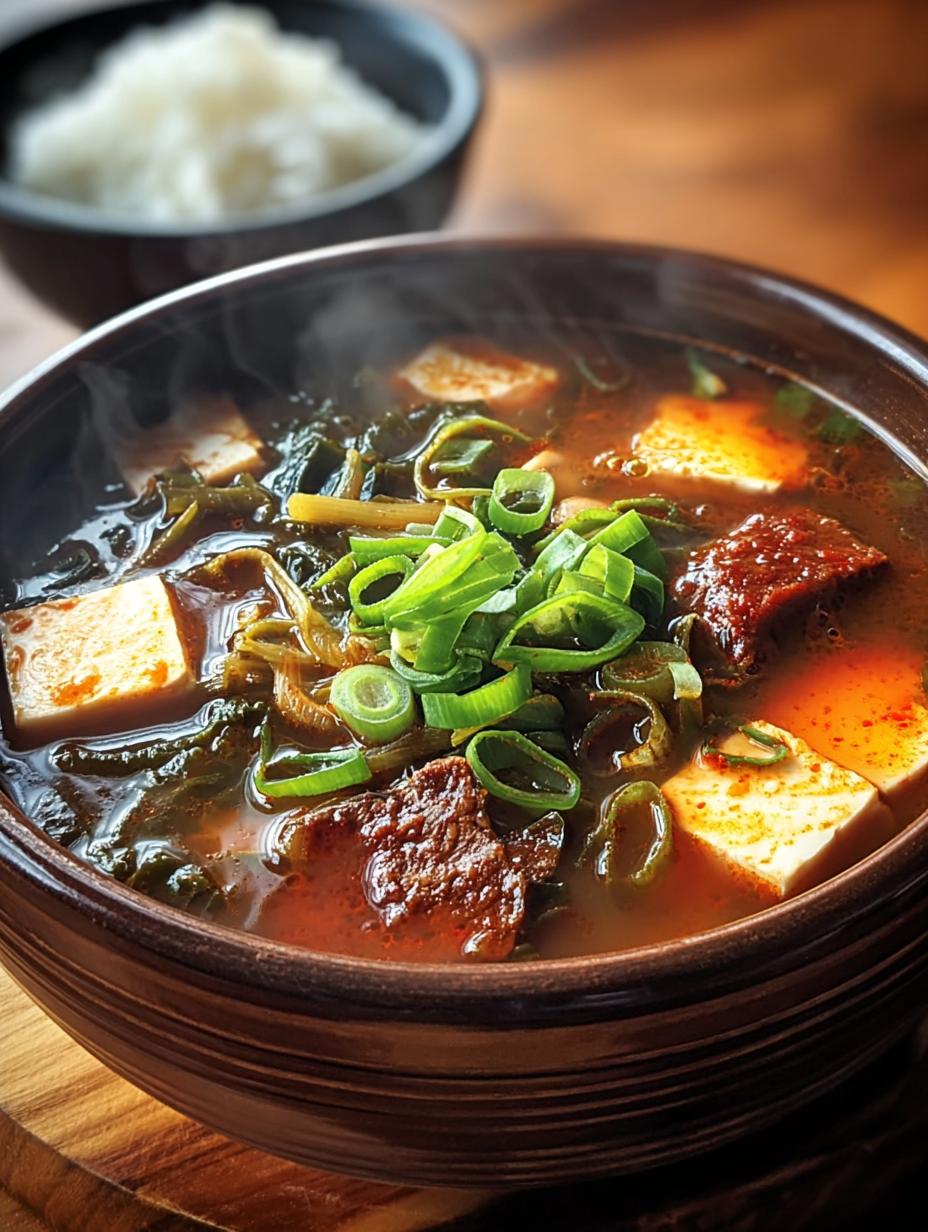
- Try a spicy version by adding gochugaru (Korean chili flakes) for heat.
For more tips on meal prep, check out this guide. If you’re interested in other comforting recipes, visit this page for inspiration. You can also learn about the health benefits of Korean ingredients here.
Print
Korean Winter Soup: 7 Hearty Recipes for Cold Days
- Total Time: 75 minutes
- Yield: 4 servings 1x
- Diet: Gluten Free
Description
Comforting Korean Winter Soup for Cozy Nights In
Ingredients
- 4 lbs beef short ribs (can substitute with beef shank or oxtail)
- 10 cups water
- 1 block tofu (can swap with seitan for vegetarian option)
- 5 stalks Korean green onions (or fresh leeks or a mix of green onions and chives)
- 1 cup radish (can omit if desired)
- 4 cloves garlic (always use fresh for best flavor)
- 1 inch ginger (fresh ginger for the most vibrant taste)
- 3 tablespoons guk ganjang (Korean soup soy sauce)
Instructions
- Begin by soaking the beef short ribs in cold water for 1 hour to draw out any blood. After soaking, drain the water and optionally flash boil the ribs for 5 minutes before rinsing them under warm water.
- While the ribs are soaking, finely chop the onion, ginger, garlic, and Korean green onions, including their roots if using. Set aside.
- In a large stock pot, combine the soaked beef ribs, chopped aromatics, and 10 cups of water. Bring to a rolling boil over medium-high heat.
- Reduce the heat to medium and skim off any foam that forms using a slotted spoon.
- Lower the heat to medium-low and let the broth simmer uncovered for 1 hour while skimming the foam occasionally.
- After an hour, incorporate the radish slices into the broth. Cook for an additional 20 minutes or until the radish is tender but still holds its shape.
- Once the radish is tender, discard the aromatics from the pot. Season the broth with guk ganjang, sea salt, and the remaining garlic, stirring well. Simmer for another 10 minutes.
- Ladle the warm soup into bowls, garnishing with freshly sliced green onions and a sprinkle of black pepper.
Notes
- Prep Time: 15 minutes
- Cook Time: 60 minutes
- Category: Soup
- Method: Stovetop
- Cuisine: Korean
Nutrition
- Serving Size: 1 bowl
- Calories: 520 kcal
- Sugar: 0 g
- Sodium: 1100 mg
- Fat: 30 g
- Saturated Fat: 10 g
- Unsaturated Fat: 20 g
- Trans Fat: 0 g
- Carbohydrates: 20 g
- Fiber: 2 g
- Protein: 35 g
- Cholesterol: 80 mg
Keywords: Korean Winter Soup, Comfort Food, Hearty Soup